
Which type of security sensor is better?
Battery-free security sensors are usually the better fit when a clear physical event can generate the transmission energy and routine battery replacement would be inconvenient, costly or easy to miss. Battery-powered sensors remain a practical choice when the device needs continuous electronics, periodic supervision messages or features that depend on stored energy.
The decision should not be reduced to battery life alone. A professional specification also considers what event must be detected, how often the device communicates, where it is installed, how the receiver is powered, how alarms are verified and who will maintain the system over its service life.
The useful question is not “which technology wins?”
Ask which power model creates the most reliable and maintainable protection point for this site.
How the two sensor types obtain power

Battery-free sensor
A physical action inside the sensor generates a brief electrical pulse at the moment of an event. That pulse powers the wireless transmission. There is no field-sensor battery to store energy between events.
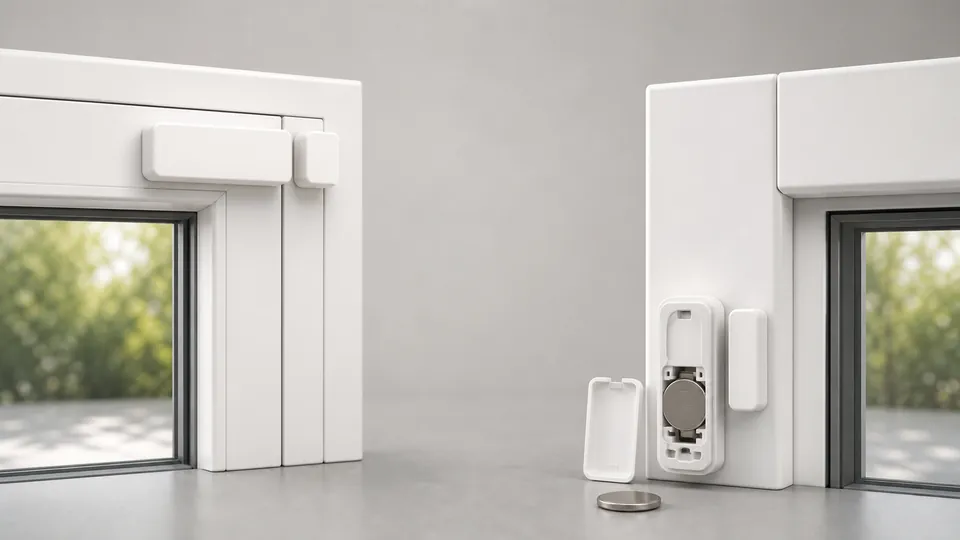
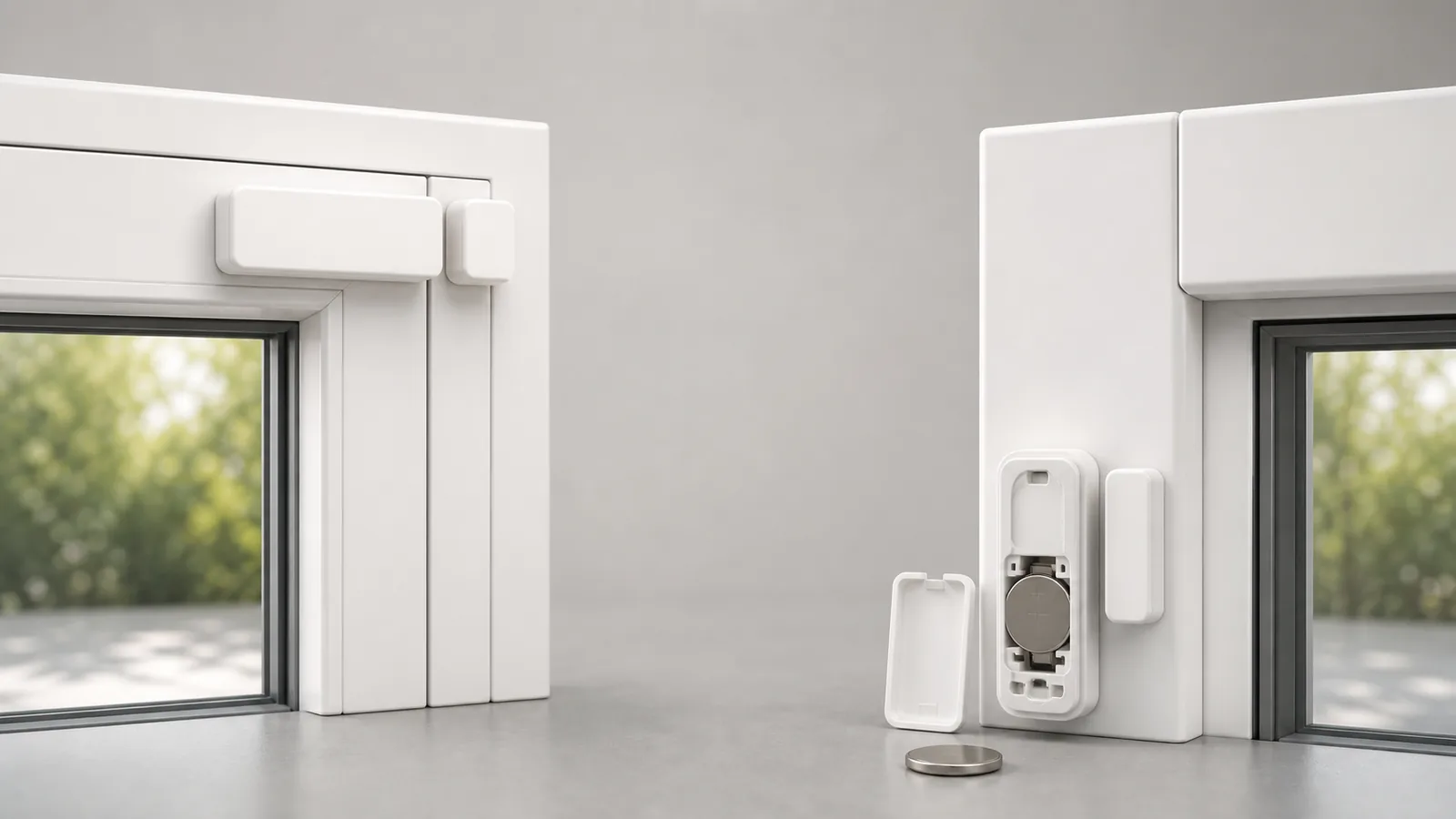
Battery-powered sensor
An internal cell supplies the detection electronics and radio. The stored energy can support event messages, status checks and other functions, but the battery eventually becomes a maintenance item.
Battery-free vs battery-powered: the practical comparison
No single row decides the project. Read the criteria together and give extra weight to access, supervision requirements and the consequences of a missed maintenance visit.
| Decision area | Battery-free | Battery-powered |
|---|---|---|
| Field-sensor energy | Generated from the monitored physical event. | Stored in an internal replaceable or integrated cell. |
| Routine battery work | No sensor battery to check, source or replace. | Replacement planning depends on the product, cell and conditions. |
| Communication model | Event-driven transmission when the mechanism is activated. | Can support event messages and periodic check-ins, subject to product design. |
| Installation access | Valuable where later access is difficult, disruptive or costly. | Works well where devices remain easy to inspect and service. |
| Feature flexibility | Best for defined mechanical events with a clear energy source. | Stored energy can support additional sensing or telemetry features. |
| System dependency | Still requires a powered compatible receiver. | Still requires a compatible receiver, hub or panel. |
| Lifecycle planning | Reduces one recurring consumable at each protection point. | Requires a documented battery inspection and replacement process. |
Maintenance is a system cost, not only a battery cost
The purchase price of a replacement cell is often the smallest part of battery maintenance. The real work can include identifying the device, gaining access, arranging a visit, opening the enclosure, replacing the correct cell, closing the housing, testing the radio path and recording the service.
Battery-free field sensors remove this battery-specific task. They do not remove commissioning, inspection or testing of the wider system.
When battery-powered sensors remain the right choice
Continuous electronics
The device needs sensing or processing that must remain powered between physical events.
Periodic supervision
The selected alarm architecture expects scheduled status messages or detailed device telemetry.
Broad platform choice
The existing ecosystem supports a wider range of battery-powered devices and protocols.
Easy service access
Devices are visible, documented and inexpensive to reach during routine maintenance.
When battery-free sensors offer the stronger advantage
Clear mechanical event
Opening, pressure, lifting or movement can supply the energy for an event transmission.
Difficult access
The protection point is exterior, elevated, discreetly finished or disruptive to revisit.
Large device count
Removing one battery task from every sensor can simplify the long-term service plan.
Retrofit constraints
The project needs wireless deployment without adding future field-sensor battery work.
Where each approach fits in a security plan

Perimeter and difficult-access points
Wall tops, fences, gates and glass balustrades can make routine battery access expensive or intrusive. Battery-free climb detection removes the cell from each field position while keeping the receiver powered indoors.
Plan a wireless perimeter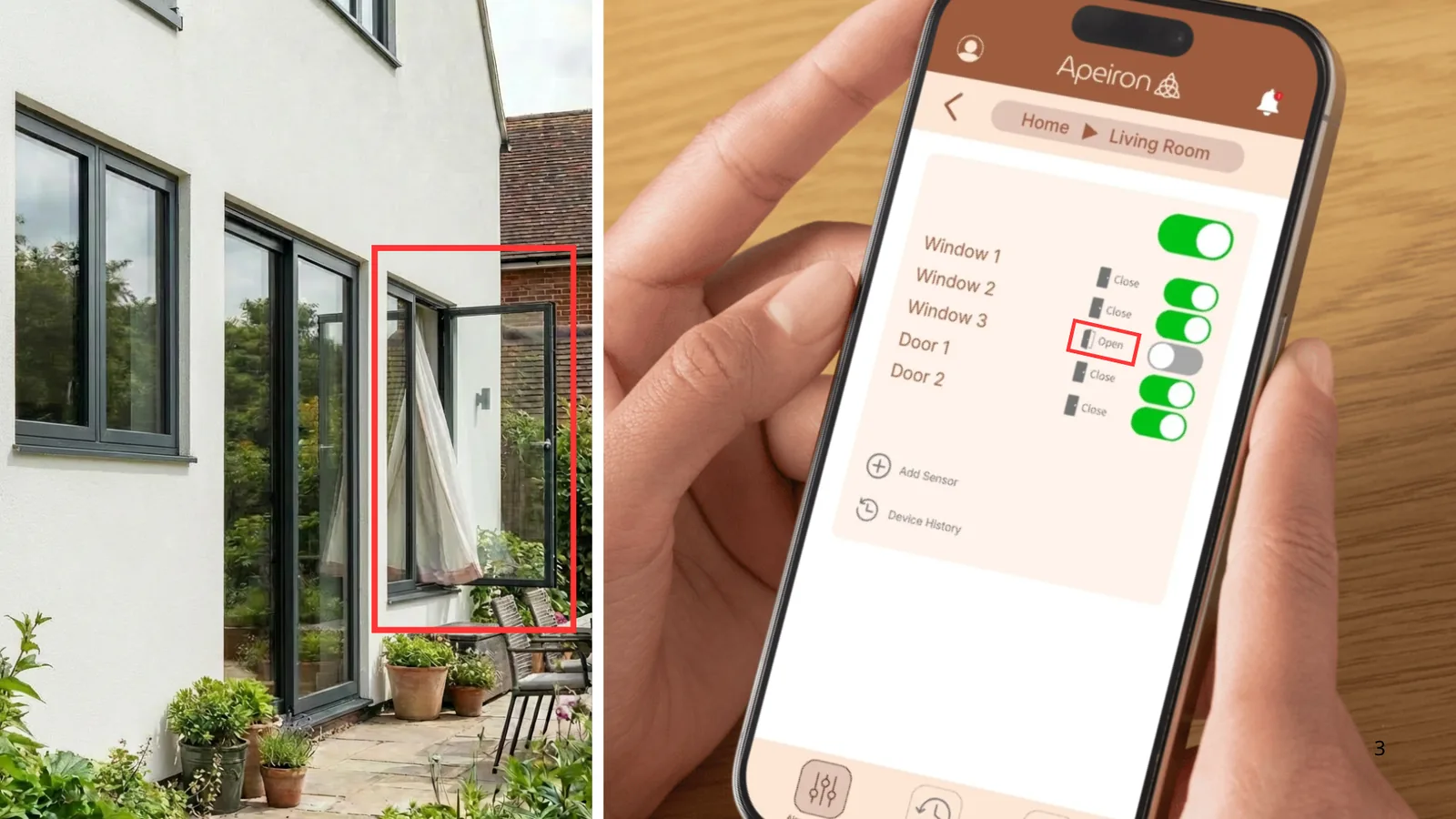
Doors, windows and interior assets
Both power models can serve entry points. Battery-free sensing becomes attractive where the opening movement supplies a reliable event and the project wants to avoid ongoing cell replacement around finished interiors or protected objects.
Review entry-point sensorsBattery-free does not mean the entire system is unpowered
Apeiron Guard field sensors need no battery or power cable, but the receiver must remain powered so it can listen continuously and create the required response. The project therefore needs two linked decisions: the field-sensor power model and the alarm-response architecture.

Mini Alarm Hub
Use for local siren, visual warning and Apeiron Guard mobile-app alerts.
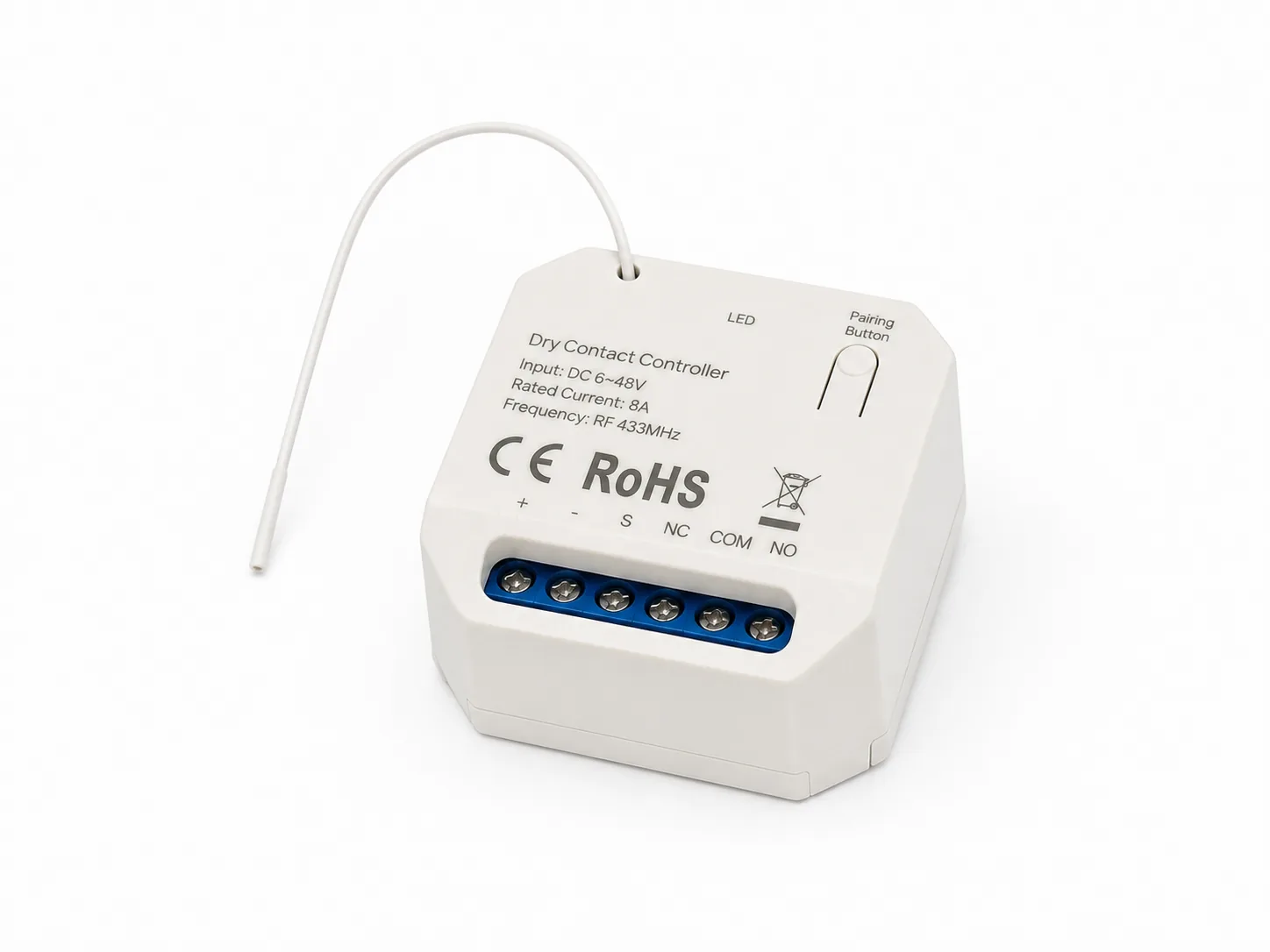
Wireless I/O Module
Use when sensor events need to enter a compatible alarm panel, smart-home controller or other system through dry-contact output.
Five questions to settle before specifying either type
- What exact event must the sensor detect?Define opening, pressure, movement or another condition before choosing a device.
- Does the device need power between events?Continuous sensing, processing or telemetry can change the answer.
- Who will maintain the protection point?Assign access, inspection, replacement and testing responsibilities.
- What must the receiver or panel do?Confirm local alarm, app notification, monitoring or third-party integration.
- How will the installed radio path be verified?Test every final location and response, regardless of power model.
How to discuss environmental impact accurately
A battery-free field sensor avoids the production, transport and disposal of a replaceable battery at that protection point. Across a large deployment, that can reduce recurring consumables and service travel associated with battery changes.
It is still important to avoid absolute claims. The receiver and wider alarm system use electricity and electronic components. Battery-powered products also vary by chemistry, efficiency, service life and recycling route. A formal environmental comparison would require product-specific lifecycle data.
For battery-powered devices, follow local disposal rules. The United States Environmental Protection Agency advises that used lithium-ion batteries should not be placed in household rubbish or municipal recycling bins and should be taken to appropriate collection or recycling locations.
Common comparison questions
Are battery-free security sensors better than battery-powered sensors?
Neither is universally better. Battery-free sensors are strong where a physical event can generate transmission energy and routine battery access would be costly. Battery-powered sensors may be preferable when continuous electronics, periodic supervision or stored-energy features are required.
Do battery-free wireless sensors need any power?
The Apeiron Guard field sensor needs no battery or wired power connection. The physical event powers its transmission. A powered receiver is still required to listen for the signal and create the alarm response.
How long do batteries last in wireless security sensors?
There is no universal figure. Chemistry, temperature, signal conditions, events, supervision intervals and device design all affect service life. Follow the manufacturer’s documentation and maintain a replacement process.
Can battery-free sensors report a low-battery warning?
No low-battery warning is needed because there is no sensor battery. The sensor, radio path, receiver and final response still need commissioning and periodic testing.
Can battery-free sensors connect to an existing alarm panel?
Apeiron Guard sensor events can pass through the Wireless I/O Module as a dry-contact output for a compatible panel or controller. The Mini Alarm Hub provides local siren and app-based response.
Comparing sensor options for a real project?
Tell us the protection point, access conditions and required alarm response.